HJRS: HEC Journal Recognition System – Recognized Journals Guide
Learn what the HEC Journal Recognition System (HJRS) is, how W, X and Y journal categories work, how to verify a journal by title or ISSN, and how to check recognition status for a research publication in Pakistan.
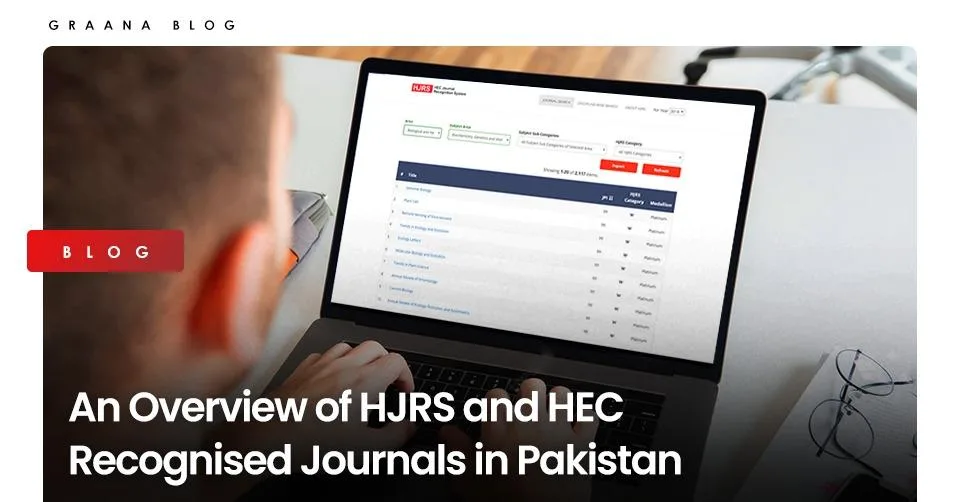
HJRS: HEC Journal Recognition System – Complete Guide to Recognized Journals in Pakistan
The HJRS HEC Journal Recognition System is an important resource for researchers, university faculty members, PhD scholars, MPhil students, and journal editors in Pakistan. Understanding how HEC journal recognition works can help researchers verify a journal’s category, check its recognition period, and make informed decisions before submitting a research paper. This complete guide explains the HJRS framework, W, X, and Y journal categories, journal verification by ISSN, and how to use reliable resources to investigate journal recognition status.
What Is HJRS?
HJRS stands for HEC Journal Recognition System. It is the framework used by Pakistan’s Higher Education Commission (HEC) to classify eligible research journals according to the applicable journal recognition policy.
Journal recognition is important because universities and researchers may need to establish whether a journal meets the requirements for a particular academic purpose. These requirements can vary according to the relevant HEC policy, university regulations, degree requirements, or research evaluation rules.
The official HEC website provides journal-recognition information and relevant policy resources.
Official HEC resource: https://www.hec.gov.pk/english/services/faculty/journals/Pages/default.aspx
Researchers should always consult the official HEC record and the policy applicable to their publication period before making a formal academic decision.
What Are the W, X, and Y Journal Categories?
HEC uses W, X, and Y categories within its journal recognition framework. The exact eligibility criteria and implications of each category should be checked against the applicable HEC policy and official recognition list.
Category W
Category W is associated with journals meeting the applicable higher-level recognition criteria, including relevant Web of Science Core Collection indexing requirements under the applicable policy.
Researchers should verify a journal’s actual indexing record and HEC recognition status instead of relying solely on an impact-factor claim, logo, or statement on a journal website.
Category X
Category X represents a recognition category defined by the relevant HEC policy. Its eligibility requirements should be checked against the policy version and official journal list applicable to the period being investigated.
A journal’s presence in a particular indexing database does not, by itself, prove that it holds Category X status for every period.
Category Y
Category Y is another formal category in the HEC journal recognition framework. Journals must meet the applicable requirements for the relevant recognition route and period.
Category labels should be understood in the context of HEC’s formal classification system. Researchers should check their university’s requirements to determine which category is acceptable for their particular purpose.
Why You Should Check the Current Policy
Recognition criteria and their academic implications may change when HEC updates its policy. Older articles, unofficial lists, and previously downloaded PDFs may not reflect the latest requirements.
Always consult the relevant HEC policy and official list before relying on a category for a degree, promotion, research evaluation, or other academic purpose.
How to Check Whether a Journal Is HEC Recognized
Before submitting a manuscript or paying a publication fee, take the following steps to investigate the journal.
Step 1: Identify the Exact Journal
Record the journal’s full title, publisher, official website, and ISSN or E-ISSN. Journals can have similar names, so a title-only search may return the wrong publication.
Step 2: Consult the Official HEC Journal List
Visit the official HEC recognized-journals page:
https://www.hec.gov.pk/english/services/faculty/journals/Pages/default.aspx
Find the list that applies to the period you need to verify. Check the journal’s title, identifier, category, and any relevant notes.
Step 3: Check the Recognition Period
A journal’s status in one period does not automatically establish its status in another. If your research paper was published in an earlier year, investigate the record applicable to that publication period.
Step 4: Compare the ISSN or E-ISSN
Compare the ISSN in the official record with the identifier displayed on the journal’s website. If the title matches but the identifier differs, investigate the discrepancy before relying on the result.
Step 5: Verify Indexing Separately
If a journal claims to be indexed in Scopus, Web of Science, DOAJ, or another database, consult the relevant database directly.
Indexing and HEC recognition are separate questions. A journal may have an indexing record, but that alone does not establish its HEC category for a particular period.
Step 6: Keep a Record of Your Search
For important academic decisions, save the official source, relevant recognition period, journal identifier, and date of verification. If records conflict, contact HEC or your university’s research office for clarification.
How to Use HJRS.com.pk for Journal Verification
HJRS.com.pk is an independent journal discovery and verification platform designed to help researchers investigate journal details, recognition information, and related publication records.
Visit the HJRS.com.pk homepage to explore the available resources.
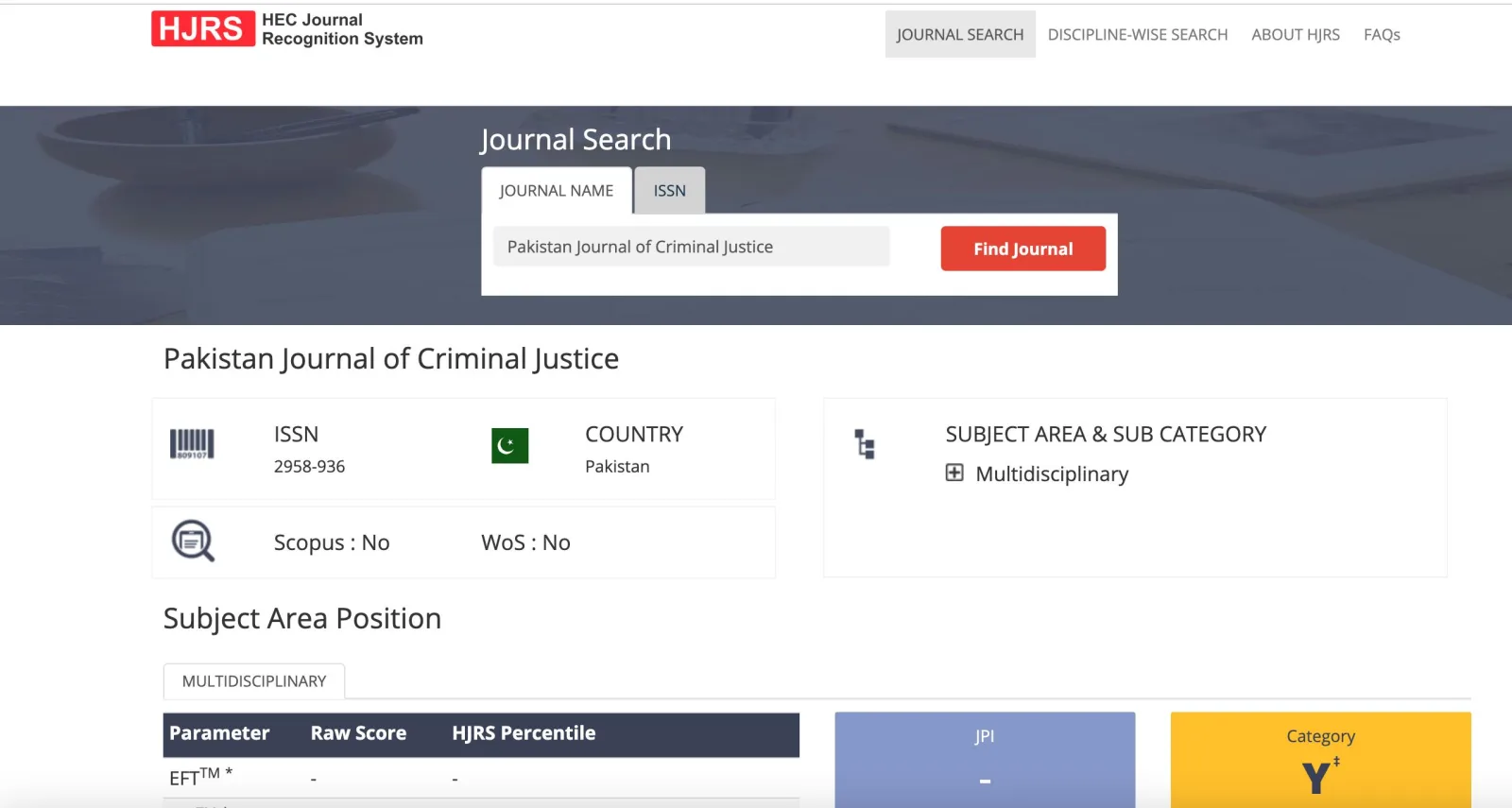
Search for Journals
Use journal-search facilities to investigate a journal by title or ISSN where the relevant record is available. Checking the identifier can help distinguish publications with similar titles.
Review the available journal information and follow the underlying sources when a formal decision depends on the result.
Check Article-Related Information
Researchers can also visit the HJRS Article Search page to investigate available article-related information.
Article verification may require the article title, DOI, journal identifier, publication date, or other available metadata. The accuracy of a match depends on the completeness and reliability of the underlying records.
If a record is incomplete or a match cannot be confirmed, do not treat the absence of a result as proof that the article or journal is unrecognized.
Review Historical Recognition
Historical recognition information can help researchers investigate the status associated with a particular publication period.
A current journal category should not automatically be applied to an older article. Always compare the article’s publication date with the relevant official record.
Explore Data Sources and Methodology
Transparency is important when using journal information. Read the platform’s data sources page to explore the sources used for available information.
You can also visit How We Verify to understand the platform’s verification approach and its limitations.
HJRS.com.pk is an independent information resource, not the official HEC website. For formal academic decisions, the relevant official HEC records and policies take precedence.
HEC Recognized Journals List for 2026–2027
Researchers searching for the HEC recognized journals list for 2026 or 2027 should begin with the official HEC website rather than rely on an old PDF or an unverified third-party list.
Visit the official HEC recognized-journals page and locate the document applicable to your publication period.
Before relying on a list, check:
- The period covered by the document.
- The document’s publication or revision date.
- The exact journal title and ISSN/E-ISSN.
- The recorded category and any relevant notes.
- Whether a later official notification or correction applies.
Search results and third-party platforms can help you discover relevant information, but they should not replace the applicable official record.
What Are the Requirements for HEC Journal Recognition?
HEC requirements depend on the applicable journal policy and recognition route. Relevant requirements may concern journal identification, ISSN, website accessibility, publication history, editorial information, peer-review procedures, publication ethics, and indexing or other quality criteria.
Journal editors should read the current HEC Journals and Publications Policy carefully and confirm which requirements apply to their journal and category.
A journal’s website, ISSN, or statement that it follows peer review does not guarantee recognition. Meeting general publishing standards should not be confused with receiving a formal HEC category.
For official guidance, start with the HEC website.
Common Mistakes to Avoid When Checking HEC Journals
Relying on an Old List
An older list may be useful for historical research, but it may not establish the current recognition status of a journal.
Confusing Indexing with Recognition
Scopus, Web of Science, DOAJ, and HEC recognition serve different purposes. Verify each claim using its appropriate source.
Ignoring the ISSN
A similar title does not necessarily mean that two websites refer to the same journal. Compare the ISSN or E-ISSN and publisher information.
Trusting Logos Without Checking the Source
A journal website may display indexing or recognition logos. Verify the claim through the relevant database or official HEC record.
Assuming a Missing Record Means Rejection
A journal may be absent from a third-party search because its record is unavailable, incomplete, or not matched correctly. Absence from an incomplete dataset does not prove that HEC has rejected or derecognized the journal.
Applying Current Status to an Older Publication
If a university requires recognition status for the date of publication, check the applicable historical record rather than relying only on the journal’s present status.
Frequently Asked Questions About HJRS
What does HJRS stand for?
HJRS stands for HEC Journal Recognition System, the journal classification framework used by Pakistan’s Higher Education Commission.
How can I check whether a journal is HEC recognized?
Consult the official HEC recognized-journals page, identify the applicable period, and compare the journal title and ISSN/E-ISSN with the official record. HJRS.com.pk can also be used as an independent research aid.
What are the W, X, and Y journal categories?
W, X, and Y are categories in the HEC journal recognition framework. Their precise criteria and implications depend on the applicable HEC policy and recognition period.
Is HJRS.com.pk the official HEC website?
No. HJRS.com.pk is an independent journal discovery and verification platform. The official HEC website is https://www.hec.gov.pk/.
Is a Scopus-indexed journal automatically HEC recognized?
Do not assume that indexing alone establishes a particular HEC category. Check the official HEC record and applicable policy separately.
Where can I find the HEC recognized journals list for 2026?
Start with the official HEC recognized-journals page and select the document that applies to the period you need to verify. Check the document date, journal identifier, and category.
Can a journal’s HEC category change?
Recognition status may differ between periods as policies, indexing records, and official decisions change. Check the relevant period rather than assuming that a current category also applied in the past.
What should I do if HEC and a third-party platform show different information?
Compare the journal title, ISSN/E-ISSN, recognition period, and document version. For formal academic decisions, seek clarification from HEC or your university’s responsible office.
Final Thoughts
The HJRS HEC Journal Recognition System is an important reference for researchers and journal editors in Pakistan. Understanding journal categories, checking the applicable recognition period, comparing ISSN details, and consulting reliable sources can help researchers make more informed publishing decisions.
Use the official HEC website for authoritative recognition information and HJRS.com.pk as an additional resource for journal discovery, article-related searches, historical
This article is general guidance based on the information available on its publication date; HEC policies and lists are the authority. Terms & conditions apply.
Keep reading
How to Check HEC Recognized Journals in Pakistan (2026-27 Guide)
Learn how to check HEC recognized journals in Pakistan, verify W/X/Y categories, confirm ISSN details, review recognition periods, and use official HE…
How to Check HEC Journal Recognition Status Before Publishing
Learn how to check HEC journal recognition status before publishing a research paper. Verify W, X and Y categories, ISSN details, historical recogniti…

HEC Journal Recognition System (HJRS): Complete Guide
The HEC Journal Recognition System (HJRS) helps researchers understand journal recognition and categories in Pakistan. Learn about W, X and Y categori…