HEC Journal Recognition System (HJRS): Complete Guide
The HEC Journal Recognition System (HJRS) helps researchers understand journal recognition and categories in Pakistan. Learn about W, X and Y categories, journal verification, and how to check HEC journal status.

HEC Journal Recognition System (HJRS): A Complete Guide to Recognized Journals in Pakistan
The HEC Journal Recognition System (HJRS) is an important resource for researchers, university teachers, MPhil and PhD scholars, and academic institutions in Pakistan. Understanding HEC journal recognition can help researchers identify suitable journals, check recognition categories, and make informed decisions before submitting their research papers.
In Pakistan, journal recognition may be relevant to academic research, faculty promotion, postgraduate research, and institutional publication requirements. However, journal recognition, international indexing, and university acceptance are different matters and should be verified separately.
This guide explains the HEC Journal Recognition System, W, X and Y journal categories, journal verification, and the important checks researchers should perform before submitting a manuscript.
What Is the HEC Journal Recognition System?
The HEC Journal Recognition System is associated with the Higher Education Commission of Pakistan and its framework for recognizing and categorizing scholarly journals.
The system is commonly referred to as HJRS. It provides a framework through which journals may be classified according to the applicable HEC journal and publication policies.
Researchers should understand that recognition status is not necessarily permanent. Policies, eligibility criteria, and journal records may change. Therefore, a journal's historical recognition should not automatically be treated as evidence of its current status.
For authoritative information, visit the official Higher Education Commission website and consult the relevant journal recognition policies and records.
Researchers can also visit HJRS.com.pk to explore journal information and use the available journal search resources.
Why Is HEC Journal Recognition Important?
HEC journal recognition can be relevant to researchers and academics for several reasons.
- Research publications: Scholars may need to publish in journals meeting specific recognition requirements.
- MPhil and PhD research: Students should check the publication rules applicable to their degree programme.
- Faculty career progression: University appointment and promotion requirements may specify particular publication criteria.
- Academic evaluation: Institutions may use applicable HEC policies when assessing research output.
- Journal selection: Researchers can make more informed decisions by checking a journal's identity, recognition status, and publication practices.
The requirements are not identical for every academic purpose. Researchers should consult their university, supervisor, or relevant research office when a particular category or recognition period is required.
Understanding HEC Journal Categories: W, X and Y
The categories W, X and Y are widely discussed in the context of HEC journal recognition in Pakistan. Their precise definitions and eligibility requirements must be interpreted according to the applicable HEC policy.
W Category Journals
The W category has been associated with journals meeting the relevant HEC criteria, including specified Web of Science Core Collection indexes.
These indexes include the Science Citation Index Expanded (SCIE), Social Sciences Citation Index (SSCI), and Arts & Humanities Citation Index (AHCI).
Researchers should verify the journal's exact indexing record and the applicable recognition period. A publisher's claim alone is not sufficient to establish current recognition.
X Category Journals
The X category has been associated with journals meeting the applicable HEC criteria for this category. Depending on the policy in force, relevant indexing pathways and additional requirements may apply.
A journal's presence in Scopus does not, by itself, prove that it belongs to the HEC X category. Researchers should check the relevant policy and official recognition record before relying on a category claim.
Y Category Journals
The Y category has been associated with journals meeting the applicable HEC requirements for this category.
The criteria may depend on the relevant policy, recognition period, indexing arrangements, and other eligibility conditions. Researchers should not assume that every journal described as peer-reviewed or indexed automatically qualifies for HEC recognition.
Important: W, X and Y category criteria can depend on the applicable HEC policy and its effective period. Always verify the relevant official requirements instead of relying exclusively on a general online description.
How to Check HEC Journal Recognition Status
Before submitting a manuscript, researchers should verify the journal carefully.
Step 1: Find the Exact Journal Title
Start with the complete journal title. If possible, obtain its print ISSN (p-ISSN) and electronic ISSN (e-ISSN).
This is important because different journals may have similar names.
Step 2: Search for the Journal
Visit HJRS.com.pk and use the available search facilities to locate the journal.
Search by title or ISSN where supported. Compare the search result with the journal's official website and publication details.
Step 3: Verify the HEC Category
Check whether an authoritative HEC record identifies the journal's category and the period to which that recognition applies.
Do not confuse an old category, an estimated classification, or a third-party listing with an officially confirmed current status.
Step 4: Check the Indexing Database
If a journal claims to be indexed in Scopus or Web of Science, check the relevant database directly.
For Scopus information, visit Scopus.
For Web of Science information, visit Web of Science.
For open-access journal information, consult the Directory of Open Access Journals.
These services have different purposes. A journal's indexing status does not automatically establish its HEC category.
Step 5: Review the Journal Website
Examine the journal's aims and scope, editorial board, peer-review process, publication ethics, author guidelines, publication history, and article processing charges.
Be cautious if a publisher guarantees acceptance, makes unsupported claims about recognition, or promises publication without a credible review process.
Step 6: Confirm Your Academic Requirements
If you need a journal for a degree, promotion, appointment, or research project, confirm the applicable requirements with your university or relevant academic authority.
The correct choice depends on the purpose of publication and the policy applicable to your case.
What Is the Difference Between HJRS, Scopus, Web of Science and DOAJ?
These resources serve different purposes.
HJRS: Associated with HEC journal recognition and categorization under the applicable Pakistani policy.
Scopus: An abstract and citation database used to discover scholarly literature and examine citation information.
Web of Science: A collection of citation indexes used to discover scholarly publications and citation records.
DOAJ: A directory of open-access scholarly journals that meet its inclusion criteria.
A journal may appear in an international database without automatically qualifying for a particular HEC category. Similarly, inclusion in a directory should not be confused with an official HEC recognition decision.
Researchers should verify each claim through the relevant authoritative source.
How to Choose the Right Research Journal
Selecting a journal requires more than checking its category.
Consider the following factors before submission:
- Scope: Does the journal publish work in your subject area?
- Recognition: Does its verified status meet your academic requirements?
- Indexing: Is the claimed indexing current and independently verifiable?
- Peer review: Does the journal explain its review procedure clearly?
- Editorial quality: Is the editorial board identifiable and relevant to the field?
- Publication ethics: Are policies on plagiarism, authorship, conflicts of interest, and corrections available?
- Fees: Are article processing charges and additional costs disclosed?
- Publication history: Are previous issues and published articles accessible?
- University requirements: Does the journal satisfy the rules applicable to your degree or academic purpose?
A suitable journal should match your research topic, follow responsible publication practices, and meet the requirements relevant to your situation.
Common Mistakes When Searching for HEC Journals
Researchers should avoid these common mistakes:
- Assuming that every Scopus-indexed journal automatically has HEC recognition.
- Using an outdated list to establish a journal's current category.
- Confusing international indexing with HEC recognition.
- Relying entirely on screenshots or promotional claims.
- Ignoring differences between journals with similar titles.
- Submitting to a journal without checking its scope and editorial practices.
- Assuming that every third-party search result constitutes official confirmation.
Verifying the journal before submission can help researchers avoid unnecessary publication delays and academic complications.
Frequently Asked Questions About HEC Journal Recognition
What does HJRS stand for?
HJRS stands for HEC Journal Recognition System, the name commonly used for Pakistan's HEC journal recognition framework.
How can I find HEC-recognized journals?
Consult the relevant official HEC resources and use the available search facilities at HJRS.com.pk to explore journal information. Verify the applicable recognition status through authoritative records.
What are W, X and Y categories in HEC journals?
W, X and Y are the principal categories commonly associated with the HEC journal recognition framework. Their eligibility requirements depend on the applicable HEC policy and recognition period.
Is every Scopus-indexed journal recognized by HEC?
No. Scopus indexing and HEC recognition are different. The relevant journal category and eligibility requirements must be verified separately.
Can a journal's HEC category change?
A journal's recognition status may change as policies, eligibility requirements, and official records change. Researchers should check the period relevant to their academic purpose.
How can I check a journal using its ISSN?
Use the journal's p-ISSN or e-ISSN to identify the correct publication. Compare the details with the official journal website, relevant HEC records, and the claimed indexing database.
Is HJRS.com.pk the official HEC website?
No. HJRS.com.pk is a separate journal-information resource. The Higher Education Commission's own website and official records should be consulted for authoritative policy information and recognition decisions.
Conclusion
The HEC Journal Recognition System is an important consideration for researchers seeking to publish in academic journals in Pakistan. Understanding journal categories, checking indexing claims, reviewing publication ethics, and verifying the applicable recognition period can help researchers make better-informed decisions.
Before submitting a research paper, confirm the journal's exact title and ISSN, examine its publication practices, and check that its recognition status meets your academic requirements.
Visit HJRS.com.pk to explore journal information and access available journal search resources.
Disclaimer: This article is intended for educational purposes. HJRS.com.pk is an independent journal-information resource and is not the official website of the Higher Education Commission of Pakistan. Official HEC policies and records take precedence over third-party summaries.
This article is general guidance based on the information available on its publication date; HEC policies and lists are the authority. Terms & conditions apply.
Keep reading
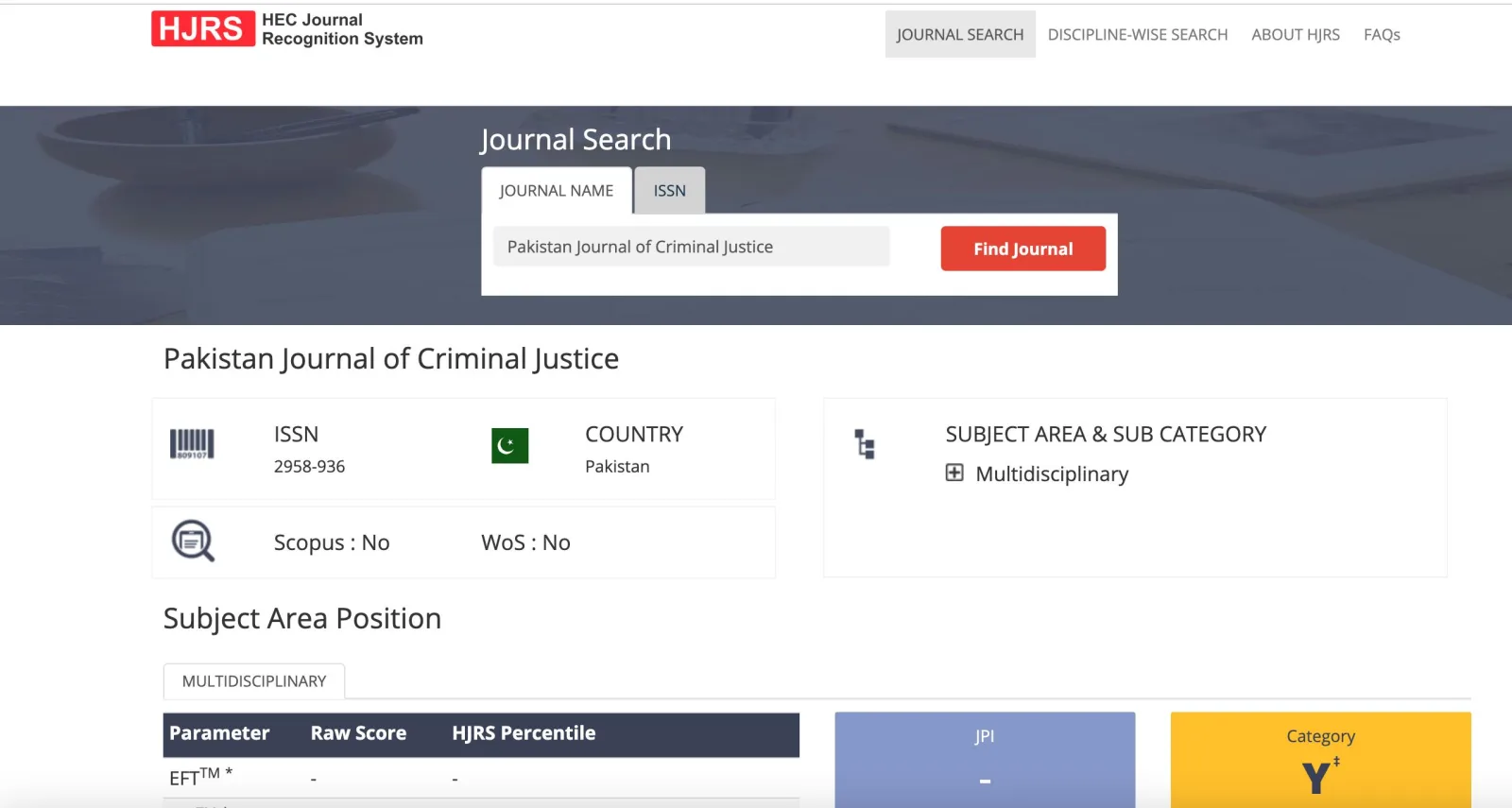
How to Check HEC Recognized Journals in Pakistan (2026-27 Guide)
Learn how to check HEC recognized journals in Pakistan, verify W/X/Y categories, confirm ISSN details, review recognition periods, and use official HE…
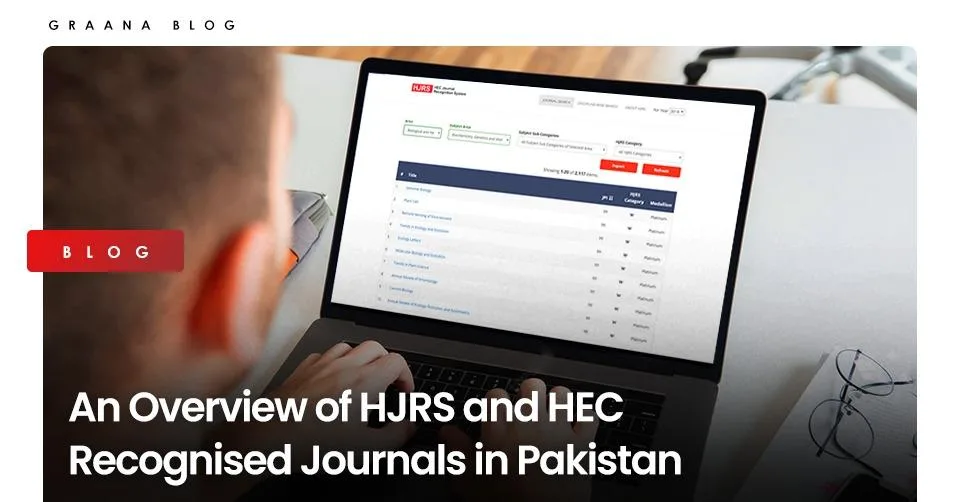
HJRS: HEC Journal Recognition System – Recognized Journals Guide
Learn what the HEC Journal Recognition System (HJRS) is, how W, X and Y journal categories work, how to verify a journal by title or ISSN, and how to…
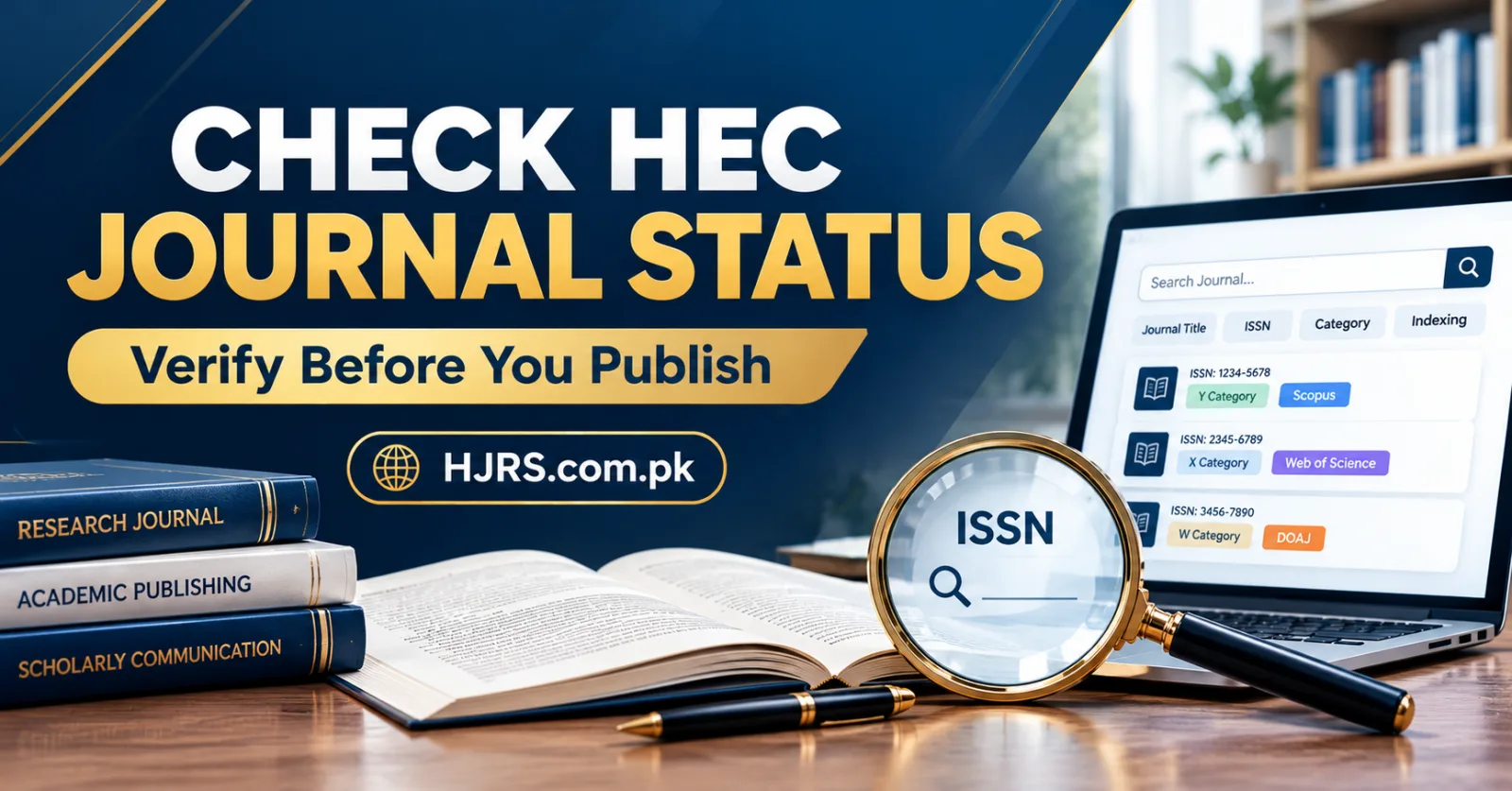
How to Check HEC Journal Recognition Status Before Publishing
Learn how to check HEC journal recognition status before publishing a research paper. Verify W, X and Y categories, ISSN details, historical recogniti…